When the cartilage in the ankle joint wears away it can cause pain, stiffness and swelling. Here is what causes it, what the evidence shows and the options Mr Chan offers.
Ankle arthritis happens when the smooth cartilage that covers the ends of the bones in the ankle joint wears away. It often follows an old injury, such as a fracture or repeated sprains, and it can also be caused by inflammatory arthritis or by wear over time.
Common symptoms
Pain deep in the ankle, often worse with activity
Stiffness, especially first thing in the morning
Swelling around the ankle
Difficulty walking on slopes, stairs or uneven ground
How it is diagnosed
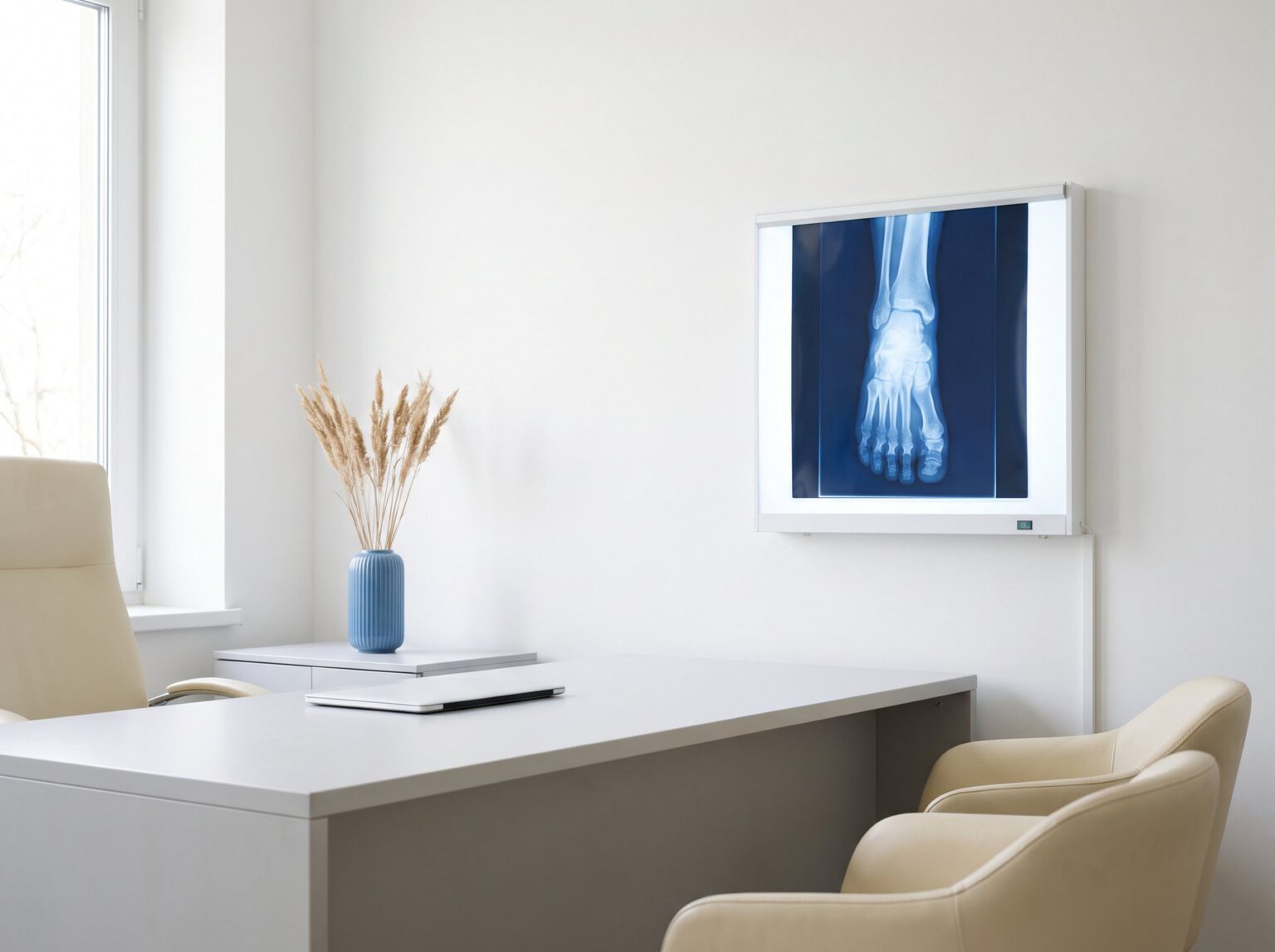
Mr Chan will ask about your symptoms and any previous injuries, examine your foot and ankle and review weight-bearing X-rays. A CT or MRI scan is sometimes helpful to plan treatment.
Both ankle replacement and ankle fusion can relieve pain for people with advanced ankle arthritis. A replacement keeps some movement in the ankle; a fusion gives a stiff but usually comfortable ankle. The right choice depends on your age, activity level, the alignment of your foot and the health of the joints nearby, and Mr Chan will talk you through the evidence for your situation.
This page is general information and is not a substitute for a consultation. Every treatment carries risks, which Mr Chan will explain before you decide.
Questions patients ask
Will I need surgery?
Not necessarily. Many people manage well for years with non-surgical treatment. Surgery is considered when pain is affecting daily life despite these measures.
Is a replacement better than a fusion?
Answer to follow: awaiting client copy.
How long is the recovery?
Answer to follow: awaiting client copy.
Content to follow: awaiting client copy.
Mr Gareth Chan
FRCS (Tr & Orth) · Foot & ankle
Insured or self-pay. Guildford, Haywards Heath, Brighton, Battersea or by video.
Mr Chan’s secretary will be in touch to arrange a time. Please do not include detailed medical information.
Cookies
We use essential cookies to run the website. With your permission we would also like to use analytics cookies, and to show maps and video, which set their own cookies. Cookie policy